Let's talk about Hyde
Aims/priorities: The grants are being fully funded from the UK Shared Prosperity Fund and offer the chance for Tameside community groups to create and support events and activities which can benefit the whole community.

Tameside
Aims/priorities: The grants are being fully funded from the UK Shared Prosperity Fund and offer the chance for Tameside community groups to create and support events and activities which can benefit the whole community.
Aims/priorities: The overall aims of the Road Safety Trust are to reduce death and injury on the UK roads through providing independent funding for research and the development of innovative approaches.
The objectives of the grant programme are to:
The theme for the Autumn 2024 round is ‘Inequalities in Road Safety’.
Aims/priorities: The communities this programme hopes to reach includes:
Aims/priorities: This is the second round of the Fund which focuses on supporting user-led LGBT+ organisations working with targeted under-represented and under-resourced communities.
The aims of the fund are to:
Aims/priorities: The Trust’s grants are split into two strands:
Who can apply? Applications are welcome from educational establishments and charities based in the UK and working predominantly in England.
Aims/priorities: This fund aims to support individuals and families who are struggling with everyday costs, such as basic living expenses, household items and utilities, or rent arrears.
Who can apply? Applications will only be accepted from recognised third party social organisation, such as charities, housing associations, schools and social services who are acting on behalf of a family or individual in need.
Priority will be given to:
Aims/Priorities: The main aims of these grants are to:
Founded by Inclusive Employers, National Inclusion Week (NIW) is a week dedicated to celebrating inclusion and taking action to create inclusive workplaces. This year it takes place from 23rd – 29th September.
The theme for National Inclusion Week 2024 is ‘Impact Matters’: a call-to-action to everyone in your organisation, from leaders, to inclusion professionals through to teams and individuals.
Here are some of the ways we are creating an inclusive workplace at Action Together, and some suggestions for where to start at your organisation.
At Action Together, we recognise that our strength comes from our diversity, so we are constantly working to be as inclusive as possible. Here are just some of the things we have done over the past couple of years:
If you want to be a more inclusive organisation but are struggling to know where to begin, these can be some useful starting points:
Language changes all the time, and we know that this can feel intimidating, but here are some tips for being confident in conversations about inclusion.
Equity (and equality) – equity is giving people different resources according to their need. For example, not everybody in a hospital should be given the same treatment – they should be given the treatment that is most appropriate for them. Equality is everybody having the same outcome, so in our hospital example we would want everybody to be equally healthy after their treatment.
Diversity – diversity is a way of describing the differences in a group of people. A group with individuals from different genders, races, religions and lived experience is a diverse group. An individual cannot be ‘diverse’, because they only have one set of experiences etc. – their own.
Inclusion – inclusion is the active process of making everybody feel like they are valued and they belong.
Anti-racism – anti-racism is the active process of working to dismantle and fight against racism and racist structures.
Neurodiversity – neurodiversity is a way of describing the different ways our brains work. Within a given group, some people may be neurotypical (the world has been built to fit the way their brains work) and some people may be neurodivergent (their brains work in different ways from how society ‘expects’ them to). This may include autistic people or people with ADHD, but there are many other types of neurodivergence. An individual cannot be ‘neurodiverse’, as they only have one brain.
Gender – gender is different from sex – it doesn’t have anything to do with our bodies and instead describes the social, cultural and behavioural ideas of being a man, woman, or other gender identity.
Trans (transgender) – transgender refers to anybody whose sex doesn’t align with their gender. The opposite of transgender is cisgender, and this refers to people whose sex and gender do align (for example if you are a man who was born male, or a woman who was born female).
Non-binary – a non-binary person is somebody whose gender identity doesn’t align completely with either ‘man’ or ‘woman’. This can mean different things for different people: for some people it means their identity changes over time, for some it means they identify with multiple genders, and some people prefer not to use gender labels at all.
Gender non-conforming – somebody might describe themselves as gender non-conforming if they don’t align with the expectations of being a cisgender man or woman.
And last but not least, another story of Employer Supported Volunteering, or Corporate Volunteering, where the employees of an organisation take time to volunteer during work hours, or organise volunteer activities.
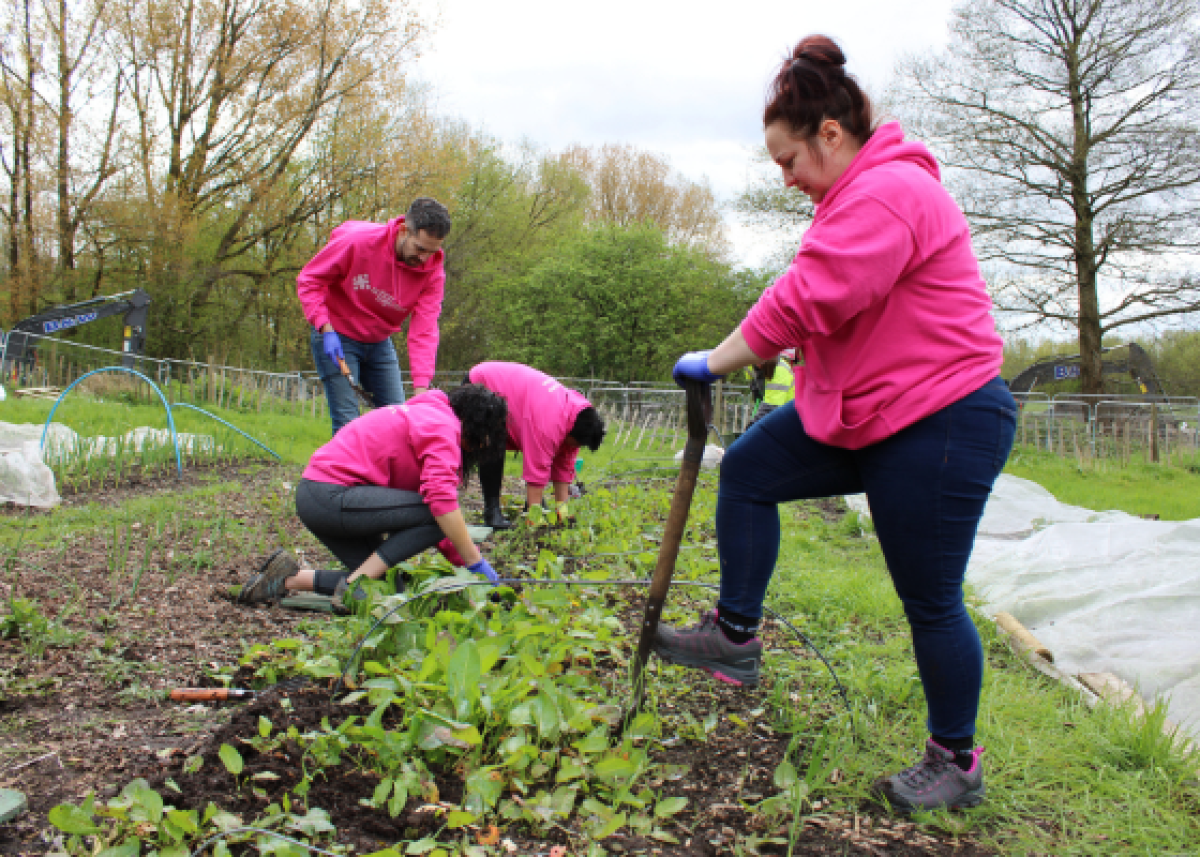
Meet our Action Together Volunteering team from Oldham who, earlier this year, took Good to Grow Week as an opportunity to volunteer their time to help support the Alexandra Park Hub. The Hub is a food-growing hub, community allotment, and is part of the Get Oldham Growing programme. It’s a resource for green fingered enthusiasts who want to learn more about growing healthy food.
Our Oldham Volunteering team met with Hannah Williams who gave them a tour around the Hub and shared with them how the Hub operates, and the many benefits it provides to the community, such as; providing volunteer opportunities, donating vegetables to local food banks, encouraging involvement from the community, and educating young students.
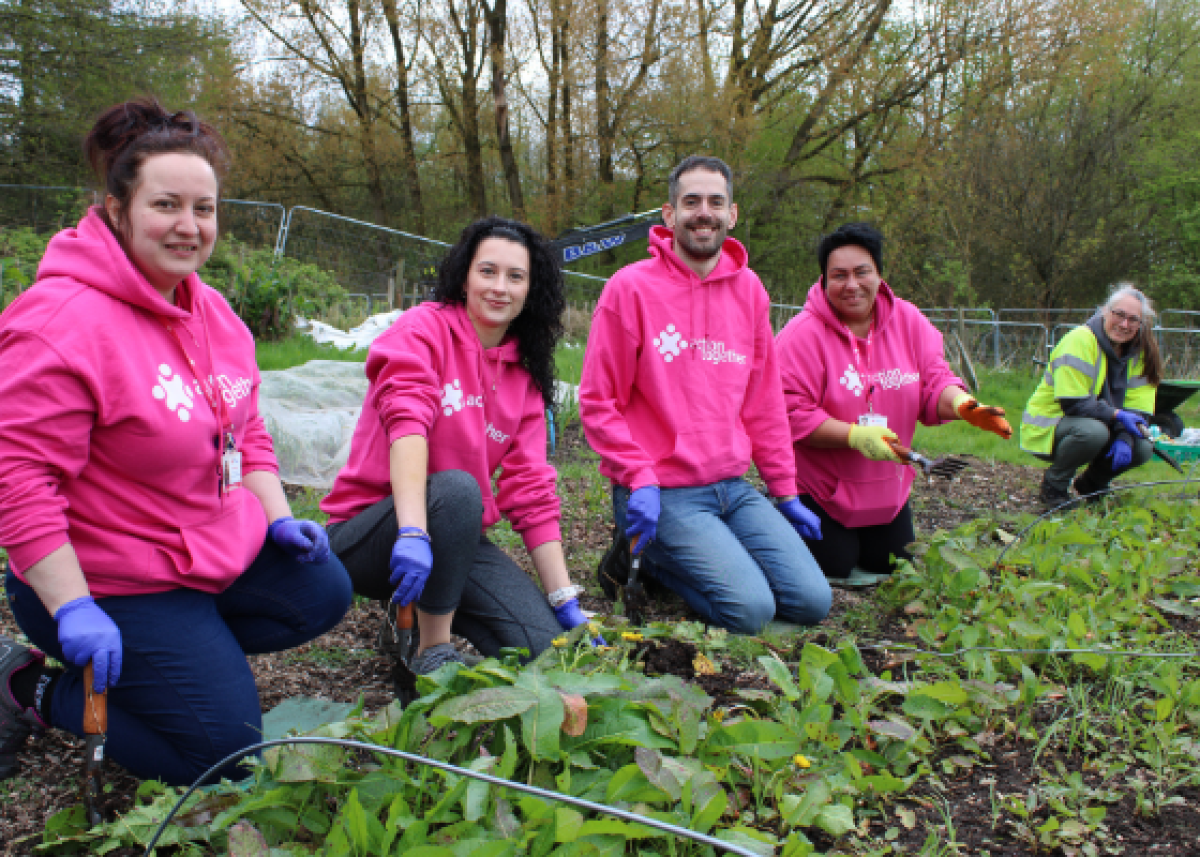
Following the tour, the team got stuck in and spent the morning removing weeds from the onion beds, in order for them to grow and be harvested in a few weeks.
Josie, Volunteering Development Coordinator at Action Together, said;
"Our team had a great time learning more about the Hub's projects and having the opportunity to do some volunteering ourselves! It was so rewarding to meet some of the volunteers who had been supported by our team, and to see first-hand how much they enjoy their volunteering roles."